Large Format Tiles vs. Traditional Slabs: Which is Better?
Modern Australian architecture is defined by the “Great Indoors”—vast, sun-drenched open-plan spaces that blur the line between the kitchen, dining, and alfresco areas. When designing these expansive zones, the flooring choice is the most critical decision you will make. It dictates the visual flow, the maintenance schedule, and the long-term value of your property.
The debate usually settles between two heavyweights: Large Format Tiles (LFT) and Traditional Slabs (such as natural stone or engineered quartz). While both offer a premium aesthetic, they differ significantly in technical performance, installation complexity, and cost-effectiveness.
In this guide, we evaluate Large Format Tiles vs. Traditional Slabs: Which is Better for Open-Plan Living? to help you make an informed investment for your Australian home.
See more: Small Spaces, Big Style: How Subway Tiles Transform Kitchens & Bathrooms
Defining the Contenders: LFT vs. Slabs
To choose the right material, we must first understand the structural and compositional differences between these two premium surfaces.
What are Large Format Tiles?
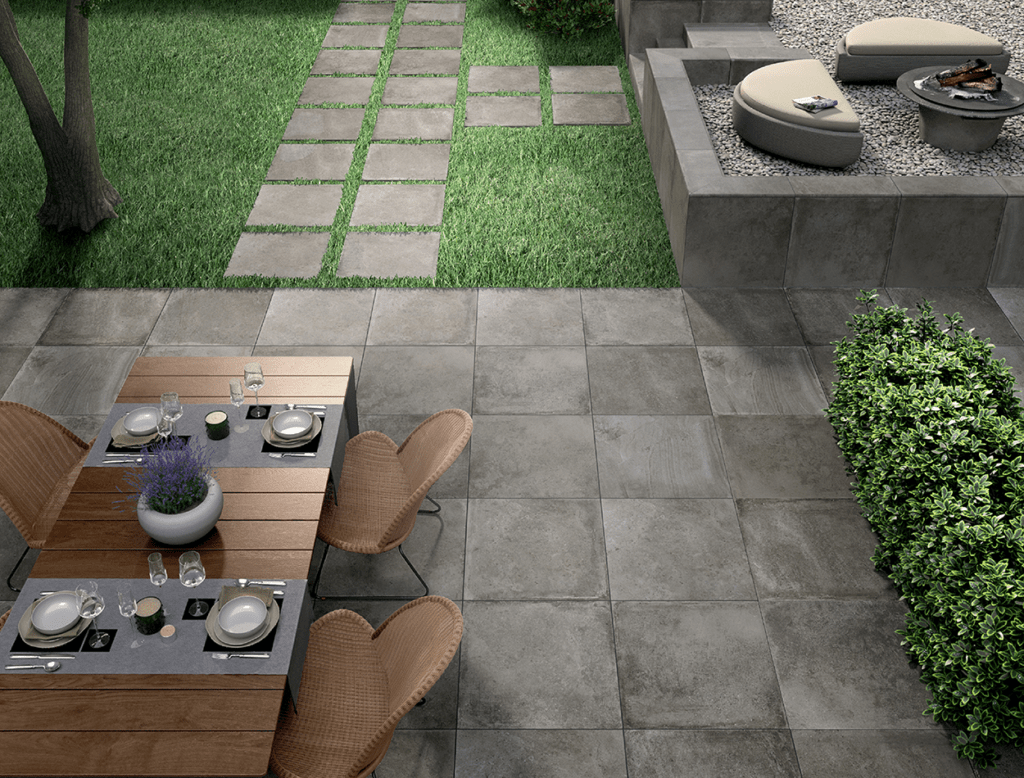
Large format tiles are typically defined as any porcelain or ceramic tile where at least one edge exceeds 600mm. However, in modern open-plan contexts, we often see “mega-tiles” reaching sizes of $1200mm \times 2400mm$ or even larger.
These are manufactured using advanced “pressed” or “rolled” porcelain technology, resulting in a thin, incredibly dense, and lightweight material that mimics natural stone, concrete, or timber with high-definition digital printing.
What are Traditional Slabs?
Traditional slabs refer to thick, solid pieces of material, usually 20mm to 30mm in depth. These are often:
- Natural Stone: Granite, Marble, or Limestone quarried from the earth.
- Engineered Stone: Crushed quartz or porcelain minerals bound with resin.
- Terrazzo: A composite material of marble, quartz, or glass chips set in cement.
Aesthetic Impact: Creating Seamless Open-Plan Flow
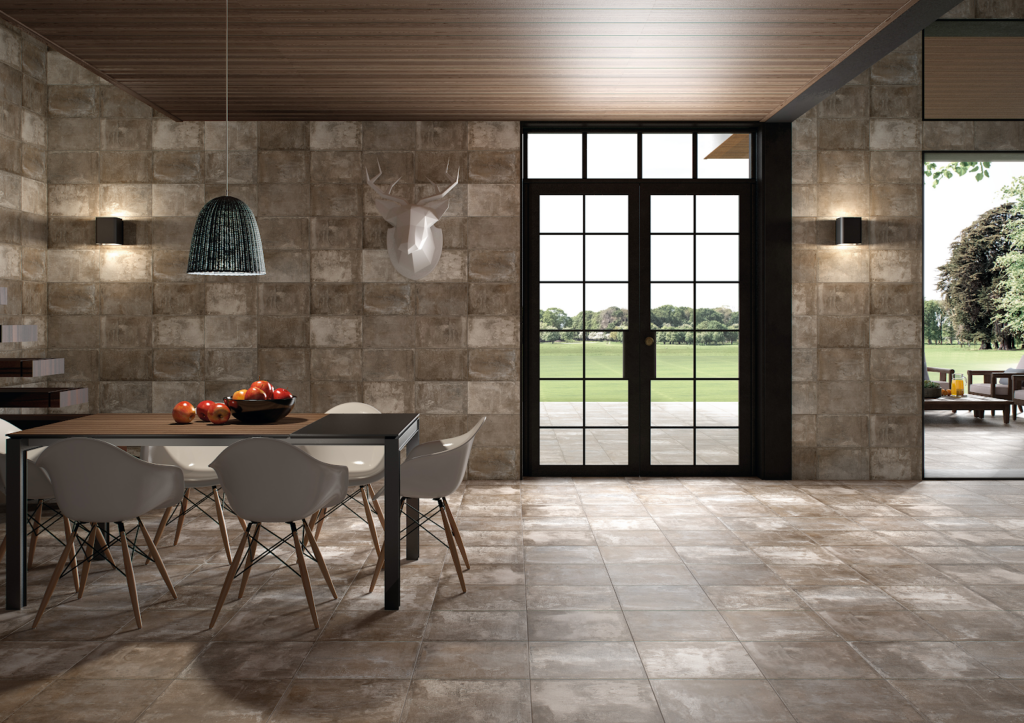
The primary goal of open-plan living is “spatial continuity.” You want the eye to move across the room without being interrupted by harsh lines.
The Power of Fewer Grout Lines
When comparing Large Format Tiles vs. Traditional Slabs, the most immediate visual difference is the “grid” effect.
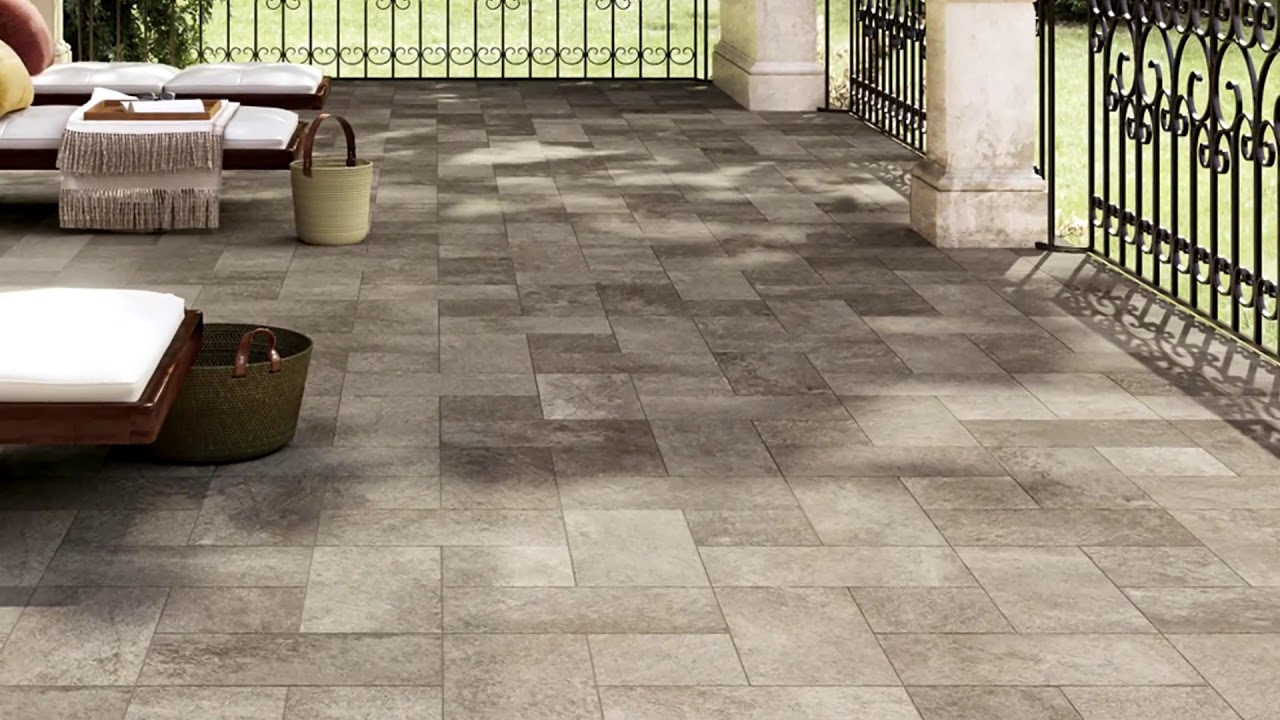
- Large Format Tiles: By using tiles as large as $3000mm \times 1000mm$, you can cover a standard living area with minimal joins. When paired with color-matched epoxy grout, the floor appears as a single, continuous surface.
- Traditional Slabs: Slabs offer the ultimate seamless look because they have zero internal grout lines within the piece. However, because slabs are heavy and difficult to transport, you are often limited by the maximum slab size (usually around $3200mm \times 1600mm$), necessitating a seam in very large rooms.
Texture and Realism
Natural slabs offer a “soul” that is hard to replicate—every vein in a piece of Carrara marble is unique. However, modern Italian and Spanish porcelain printing has reached a point where “repeats” are rare. You can now achieve the look of rare stone without the high-maintenance porousness of the real thing.
Durability and Performance in Australian Conditions
Australia’s climate—ranging from humid coastal zones to dry inland heat—places unique stresses on flooring.
Porosity and Stain Resistance
This is where Large Format Porcelain Tiles usually win. Porcelain has a water absorption rate of less than 0.5%. It is virtually impervious to:
- Red wine spills in the kitchen.
- Muddy paws from the backyard.
- UV fading from floor-to-ceiling glass doors.
Traditional Slabs, particularly natural stones like marble or limestone, are porous. They require professional sealing every 12–24 months. Without this, acidic liquids (like lemon juice or vinegar) can “etch” the surface, leaving permanent dull spots.
Thermal Mass and Comfort
Both materials have excellent thermal mass, making them ideal for Australian homes utilizing passive solar design. They stay cool in summer and pair perfectly with hydronic underfloor heating for cozy winters.
Comparison Table: At a Glance
| Feature | Large Format Tiles (LFT) | Traditional Slabs (Stone/Quartz) |
| Typical Thickness | 6mm – 12mm | 20mm – 30mm |
| Weight | Lightweight (Easy for retrofits) | Very Heavy (May require structural reinforcement) |
| Maintenance | Low (No sealing required) | Moderate to High (Requires periodic sealing) |
| Installation Cost | High (Specialized equipment needed) | Very High (Requires stonemasonry) |
| Stain Resistance | Excellent (Non-porous) | Variable (Porous if natural) |
| Scratch Resistance | Very High | Moderate (Can be polished out) |
Large Format Tiles vs. Traditional Slabs: Which is Better for Your Budget?
When calculating the cost of open-plan flooring, you must look beyond the “per square metre” price of the material.
1. Material Costs
Generally, Large Format Tiles are more affordable than premium natural stone slabs. While a high-end Italian porcelain tile might cost $120 – $200 per $m^2$, a premium marble slab can easily exceed $600 – $1000 per $m^2$.
2. Installation and Labour
This is the “hidden” cost.
- LFT Installation: Requires a specialized tiler with suction-cup lifting frames, specialized cutters, and specific “back-buttering” techniques to ensure 100% adhesive coverage.
- Slab Installation: Requires a stonemason. Because of the 20mm+ thickness and extreme weight, the labour involved in moving, cutting, and leveling slabs is significantly more intensive.
3. Structural Requirements
Traditional 20mm slabs are incredibly heavy. If you are renovating a second-story open-plan area, your subfloor may require structural reinforcement to carry the load of stone slabs. LFT, at only 6mm or 9mm thick, rarely requires such costly upgrades.
Common Mistakes to Avoid in Open-Plan Flooring
- Ignoring Slip Ratings: For open-plan areas that lead to outdoor decks, ensure your LFT has an appropriate “P” rating (usually P3 or P4) to prevent slips when feet are wet.
- Poor Subfloor Preparation: With large format materials, even a 2mm deviation in the subfloor can cause “lippage” (uneven edges) or cracking. Self-levelling compounds are a non-negotiable expense.
- Choosing the Wrong Grout: Using cheap, sandy grout with premium LFT ruins the aesthetic. Always opt for high-grade epoxy or fine-grained grout in a matching tone.
- Neglecting Expansion Joints: In large Australian homes, the building moves. Failing to include expansion joints in an open-plan floor will lead to “tented” tiles or cracked slabs as the temperature changes.
The Step-by-Step Selection Framework
If you are struggling to decide, follow this professional framework used by Australian interior designers:
- Assess the Subfloor: Is it a new slab or a timber retro-fit? (Timber usually dictates LFT due to weight).
- Define the Traffic: Is this a high-traffic zone with kids and pets? (Porcelain LFT is the safer bet).
- Check the Light: Does the room get direct afternoon sun? (Check UV stability; some resins in engineered slabs can yellow over time).
- Measure the Largest Span: If your room is 8 metres wide, how many joins are you comfortable seeing?
- Budget the “Total Package”: Get quotes for material + leveling + installation + sealing.
Expert Tips for a Professional Finish
- Internal Linking Suggestion: Guide to choosing the right tile adhesive for large formats.
- Internal Linking Suggestion: How to maintain natural stone flooring in Australian climates.
- External Reference: Refer to the Australian Tile Council for slip resistance standards and installation codes.
- External Reference: Consult the Housing Industry Association (HIA) for structural requirements regarding floor loads.
FAQ Section
Is it cheaper to install large format tiles or slabs?
Generally, Large Format Tiles are cheaper. While the installation labour for LFT is higher than standard tiles, it is typically lower than the specialized stonemasonry required for 20mm slabs.
Do large format tiles crack easily?
No, provided they are installed correctly. Cracking usually occurs due to “voids” in the adhesive or subfloor movement. When “back-buttered” and laid on a level surface, porcelain LFT is actually stronger than many natural stones.
Can I use Large Format Tiles in a kitchen?
Yes, they are an ideal choice for open-plan kitchens because they are non-porous and resistant to heat and food acids, unlike natural marble slabs.
Are grout lines visible with large format tiles?
If you use a “rectified edge” tile and a matching grout colour, the lines become nearly invisible (usually only 1.5mm to 2mm wide), creating a slab-like appearance.
Which is better for resale value in Australia?
Both add significant value. Natural stone slabs are often seen as the “pinnacle” of luxury, but savvy buyers often prefer Large Format Tiles for their low-maintenance lifestyle benefits.
Conclusion: The Final Verdict
When asking Large Format Tiles vs. Traditional Slabs: Which is Better for Open-Plan Living?, the answer depends on your priority:
- Choose Traditional Slabs if you want a one-of-a-kind, “trophy” floor, have a high budget, and are willing to perform the necessary maintenance to keep natural stone looking pristine.
- Choose Large Format Tiles if you want the high-end look of a slab with superior durability, lower weight, and a more accessible price point. For most modern Australian families, the practical benefits of high-quality porcelain LFT make it the superior all-rounder.